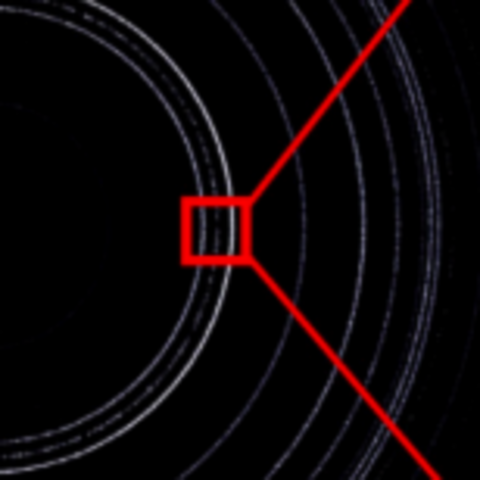
Recent research performed at CHESS presents new insights into the microstructural evolution which occurs during annealing of Mg alloys using in-situ X-ray diffraction.
This workshop will identify forefront research opportunities for optical control of physical properties in biological, chemical, and materials systems.
Today, 60 feet below the Cornell University campus, at the Cornell High Energy Synchrotron Source (CHESS), researchers utilize X-rays that are 100 million times more intense than Röntgen's first beams of light.
The Cornell High Energy Synchrotron Source, CHESS, and the University of Puerto Rico are continuing a collaboration that will shape the future of the synchrotron X-Ray laboratory as it builds the new High Magnetic Field facility, HMF.
Hybrid pixel array detectors (PADs) have proven to be powerful, versatile area detectors for X-ray science. A new prototype would enable significant advances in time-resolved studies of dynamic phenomena.
Congratulations to Matt Miller, Principal Investigator for MSN-C. Matt was just named the Willis H. Carrier Professor in Engineering at Cornell - effective July 1, 2022.
In a new paper appearing in Physical Review Letters, research co-first-authored by postdoctoral fellows Baiqing Lyu (MIT) and Alfred Zong (Berkeley) and a team lead by Prof. Nuh Gedik (MIT), claim that EuTe4 sets a new record for hysteresis in a crystalline solid.